"Tokenmaxxing" — routing as much of a product as possible through a single frontier LLM's API to squeeze out capability without building anything in-house — has become the default architecture for AI-native startups since GPT-4 and Claude 3 made third-party inference good enough to skip model work entirely. It is also, underneath the convenience, a quiet bet that the company controlling the meter never changes the rules.
That bet deserves scrutiny, because token pricing is not a stable input like AWS compute or a fixed SaaS seat license. It sits inside a market with a handful of dominant sellers — OpenAI, Anthropic, and Google chief among them — each of which sets prices, context-window limits, and rate caps unilaterally, revises them on its own schedule, and can deprecate a model version a customer has quietly built an entire workflow around.
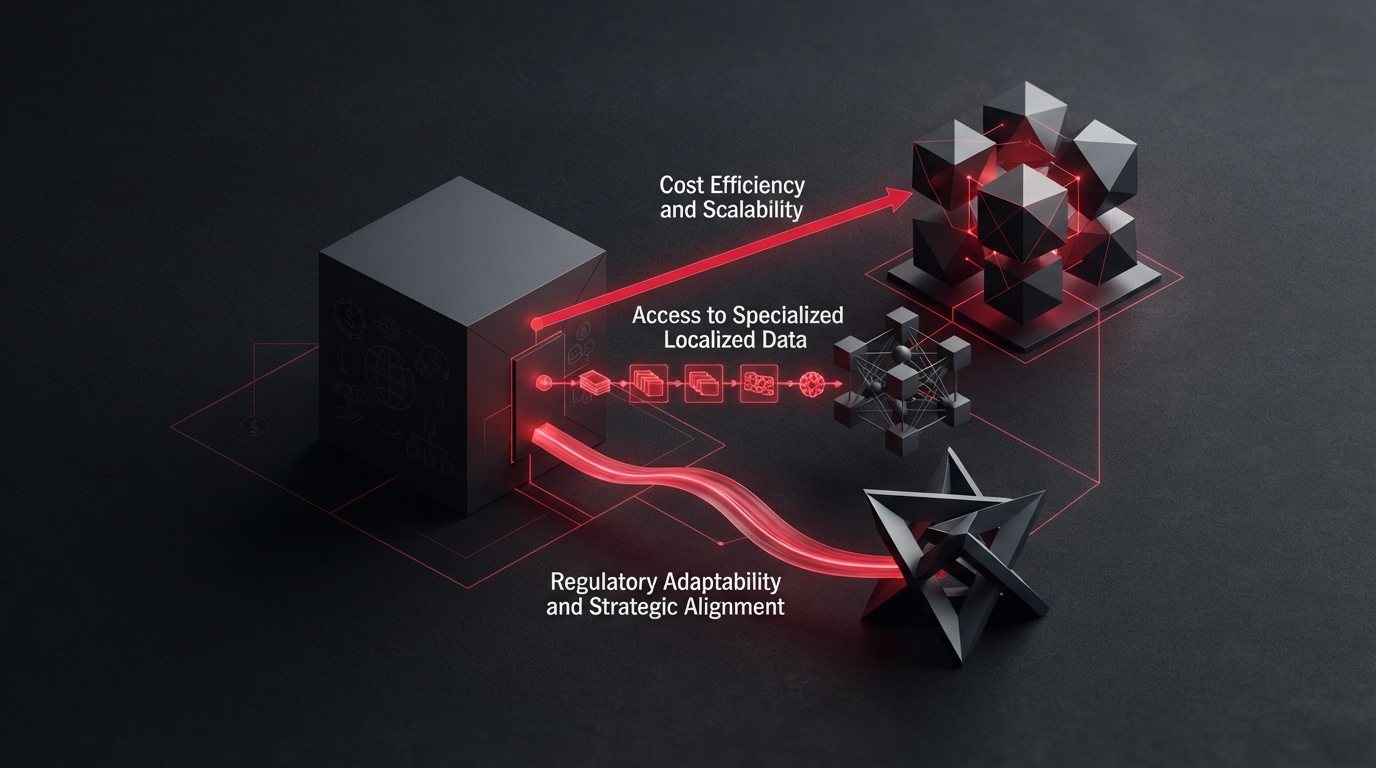
According to SiliconANGLE AI, that dependency has produced a countervailing trend: companies experimenting with "sovereign" AI infrastructure — bringing inference in-house or onto controlled hardware instead of renting it token by token from a small number of providers.
The economics nobody models until it hurts
Most AI products charge customers a flat subscription or seat price while paying providers a variable, usage-based token cost underneath. That mismatch is fine at low volume and dangerous at scale: a single power user who runs long conversations or large document uploads can quietly flip a customer from profitable to loss-making, and nothing in a typical dashboard flags it until the monthly invoice lands.
- Pricing is not fixed. Per-token rates for input and output tokens are set by the provider and have moved before, in both directions, with little notice.
- Model deprecation forces migration. When a provider retires a model version, every prompt, eval, and fine-tuned behavior built against it needs re-validation on the replacement.
- Context windows inflate cost per call. Longer windows enable richer features, but every extra token of context sent on each request is billed, not free.
- Rate limits cap throughput exactly when demand peaks. A viral moment can hit provider-side caps before it hits a company's own infrastructure limits.
What "sovereign" AI infrastructure actually means
The term covers a spectrum, not a single move. On one end, teams run open-weight models — Llama, Mistral, Qwen, DeepSeek — on owned or leased GPUs, trading provider convenience for infrastructure ownership. Further along, companies negotiate dedicated or reserved inference capacity instead of paying spot per-token rates. At the far end sit national and regional efforts to build AI compute and models independent of the handful of US-based API providers that currently set the terms for most of the industry.
None of this is free. Owning inference means owning GPU procurement, MLOps staffing, and uptime — costs that a hosted API absorbs invisibly into its per-token price. The trade is control and cost predictability at scale versus operational overhead and, often, a capability gap against the newest frontier models.
What this means for teams building on someone else's tokens
For a founder or engineering lead scaling a product on GPT-5, Claude, or Gemini, this is a unit-economics question, not an abstract industry debate. A few things are worth doing before the token bill becomes a surprise:
- Track cost per feature and per user cohort, not just the aggregate monthly API bill — an aggregate number hides which specific feature or customer segment is actually unprofitable.
- Treat provider lock-in as a named risk, the same way vendor lock-in gets tracked for cloud infrastructure, complete with an owner and a mitigation plan.
- Build a thin routing layer between the application and the model API so switching providers or model versions doesn't require rewriting prompts and business logic throughout the codebase.
- Reserve frontier-model calls for tasks that need them — reasoning-heavy or creative work — and route high-volume, low-differentiation tasks like classification or extraction to cheaper or self-hosted open-weight models.
- Negotiate committed-use pricing once volume is high enough to justify it; providers do offer better terms to customers who ask.
AiiN's takeaway
The strategic framing in the source piece is right: token dependency is an economic exposure, and companies are starting to price it as one rather than treating provider APIs as a free, permanent utility. In our estimation, the practical response for most builders won't be a full move to sovereign infrastructure — that's a heavy lift reserved for the largest players — but a hybrid setup where frontier APIs handle the hardest tasks and cheaper, more controllable models absorb the volume. Whichever side of that split a team ends up on, the point stands: if you don't know your cost per token per feature today, you don't actually know your margins.