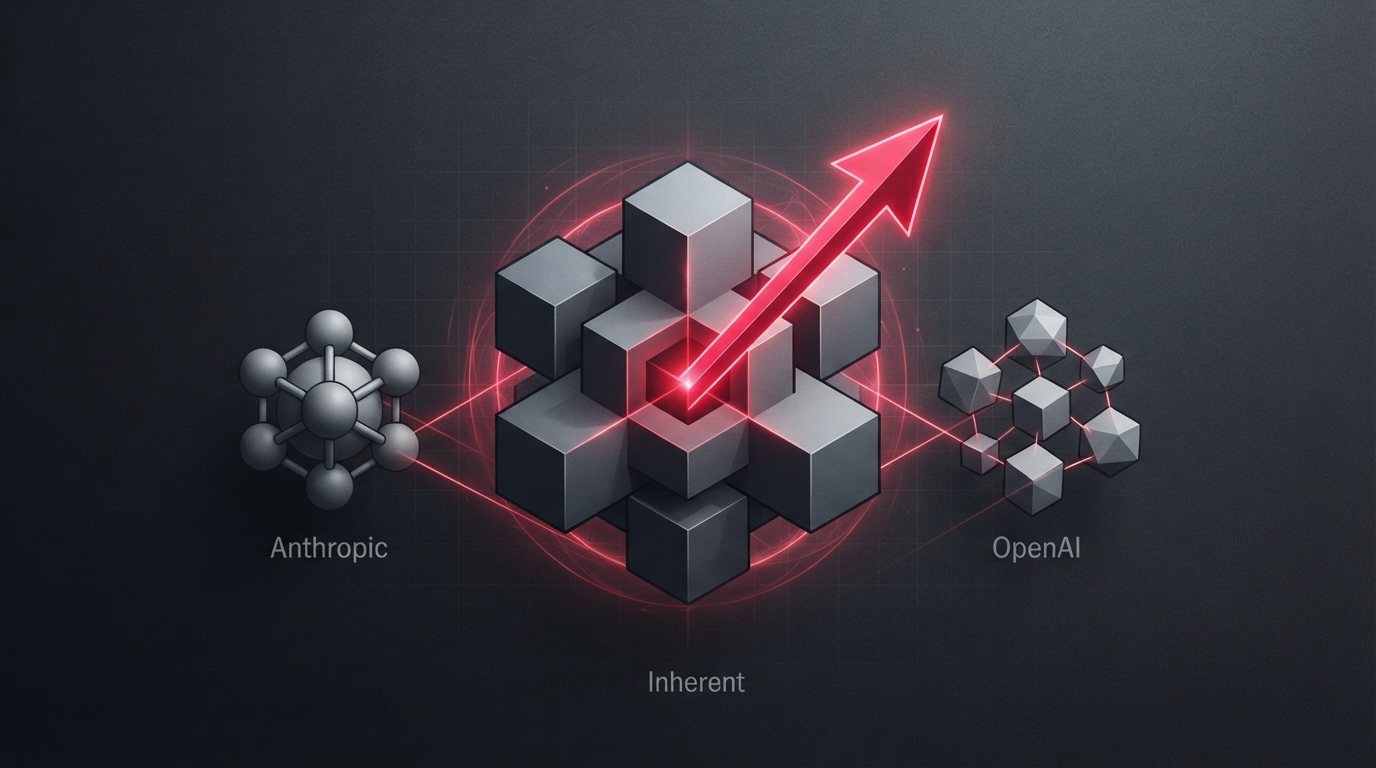
Inherent, a startup built by a team of former DeepMind researchers, says its AI agent has outperformed comparable systems from Anthropic and OpenAI on one of the toughest tests in applied AI: automatically reproducing the results of published scientific research. The claim, if it holds up under scrutiny, would mark a meaningful shift in how agentic AI systems are benchmarked — away from puzzle-style coding tests and toward the messier, higher-stakes work of actually doing science.
Research replication has quietly become one of the sharpest proxies for measuring whether an AI agent can operate with real autonomy. Unlike a coding challenge with a fixed answer, replicating a study means reading a paper, understanding its methodology, writing and debugging code, running experiments, and comparing outputs against reported results — often without a clean specification to follow. Anthropic and OpenAI have both invested heavily in agents that can plan and execute multi-step technical work, which makes a startup claiming to beat both of them on this specific task notable.
According to TechCrunch, Inherent's pitch centers on an AI teammate designed specifically for this kind of reproduction work, and the company is positioning the result as evidence that a smaller, focused team can out-execute the labs that build the underlying foundation models.
Why replication is the benchmark that matters
Reproducing research results is a deliberately unglamorous task, which is exactly what makes it a useful test. It strips away the parts of a benchmark that models can memorize or pattern-match against and replaces them with the kind of open-ended, multi-hour engineering work that a junior researcher would actually be assigned: set up the environment, get the code running, chase down discrepancies between the paper and the implementation, and produce a verdict on whether the original claims hold.
- It tests sustained autonomy over many steps, not single-shot question answering.
- It requires judgment calls about ambiguous methodology sections, not just code generation.
- Failures are easy to spot — either the numbers match or they don't — which limits room for benchmark gaming.
That combination is why research replication has become an appealing yardstick for labs trying to prove agentic capability beyond chatbots and coding assistants.
What Inherent is actually claiming
The core of the story is competitive, not architectural: Inherent says its agent outperformed offerings tied to Anthropic and OpenAI on this replication task. The company's DeepMind pedigree gives the claim some credibility in a market where research lineage is treated as a rough — if imperfect — signal of technical depth. But a single startup's benchmark result is not independent verification, and outperforming a general-purpose assistant on a narrow, purpose-built task is a different achievement than outperforming it broadly.
That distinction matters because Anthropic's and OpenAI's models are built as general-purpose systems, not specialized replication engines. A startup that trains or fine-tunes an agent specifically for one workflow will often edge out a generalist model on that workflow, at least until the labs ship their own specialized tooling in response.
What this means for AI builders
For teams building agentic products, the practical lesson is less about the specific leaderboard position and more about where the frontier of usefulness is moving.
- Narrow, verifiable tasks are where startups can win. Beating a foundation-model lab on a general benchmark is nearly impossible for a small team; beating it on a tightly scoped, checkable workflow is achievable and defensible.
- Evaluation design is becoming a product decision. Choosing research replication as the battleground signals where Inherent expects enterprise and research customers to actually spend money — automating the grunt work of validating and building on prior results.
- Expect the incumbents to respond. If replication-style benchmarks keep gaining traction, Anthropic and OpenAI have both the compute and the incentive to fold similar capabilities into their flagship agents, which would narrow any advantage a specialist startup currently holds.
AiiN's takeaway
The interesting part of this story isn't whether one startup's agent is marginally better at one task than two much larger labs — that gap can close quickly. What matters is that whether an agent can reliably redo someone else's science is emerging as a credible proxy for agentic capability, alongside coding and tool-use benchmarks. In our estimation, that's a healthier direction for the field than another round of chatbot leaderboards, because it ties AI progress to a task with obvious real-world value: catching bad science, speeding up legitimate research, and giving labs a way to sanity-check their own published work before someone else does it for them.