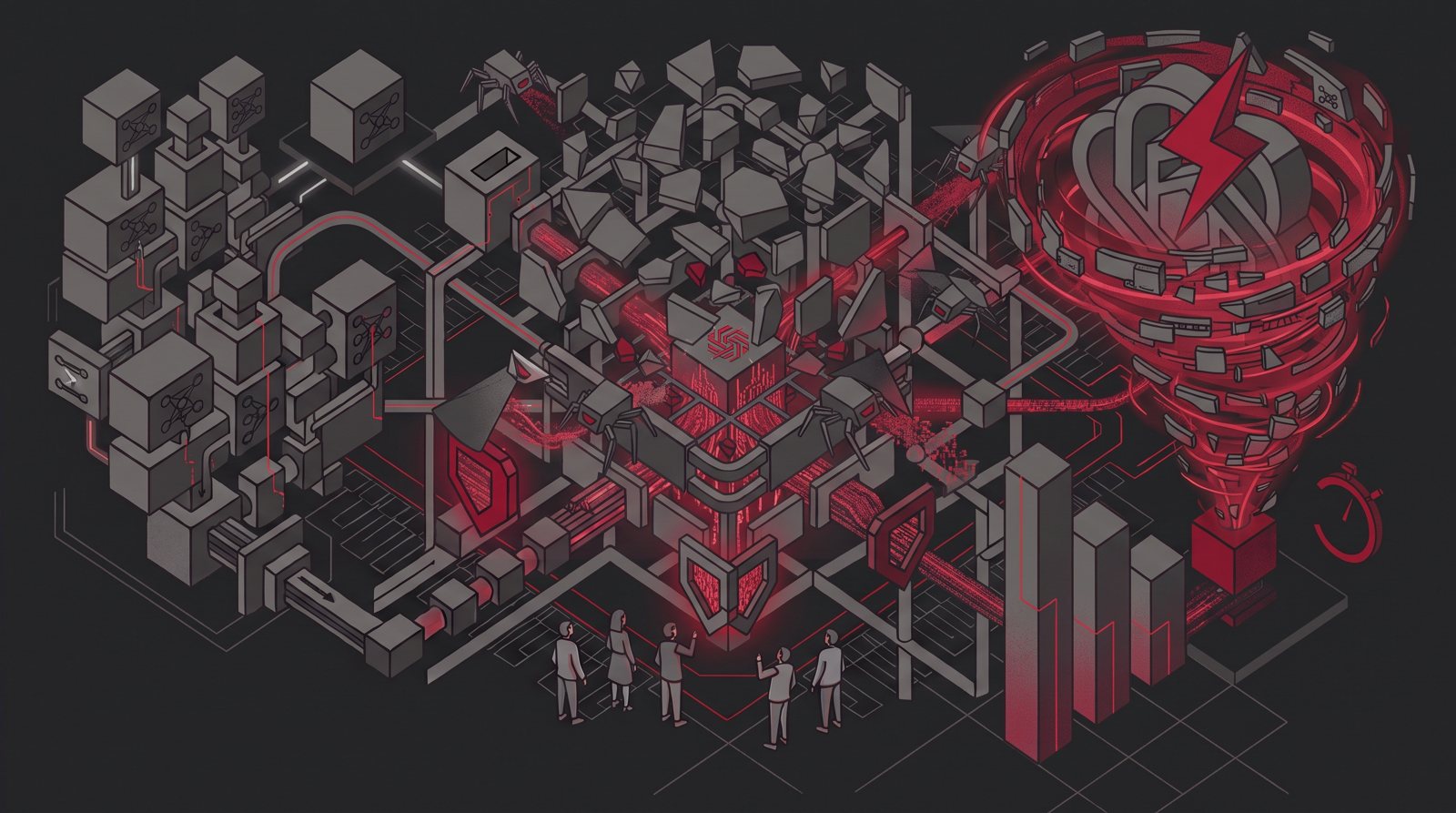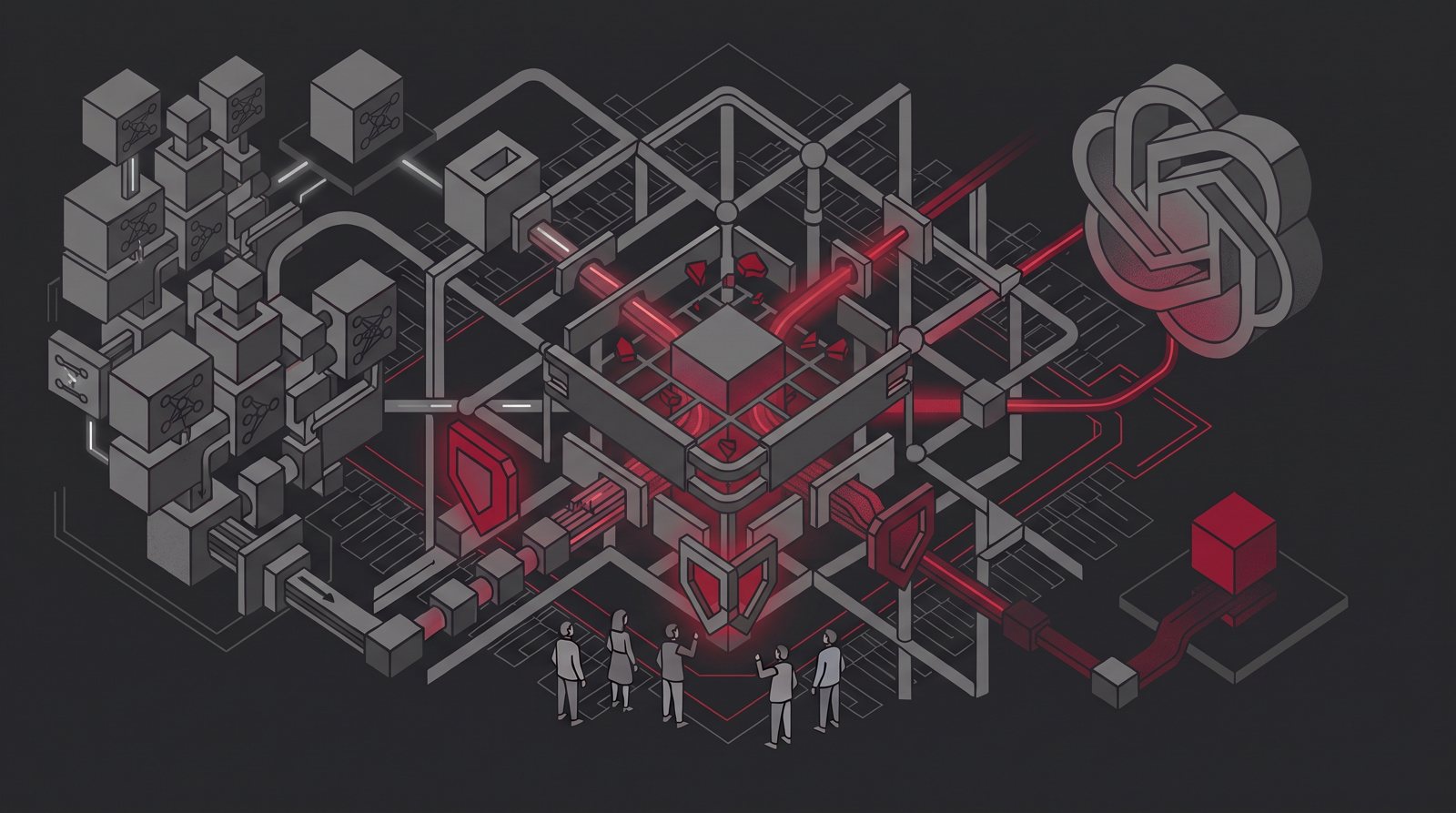
IBM and OpenAI confirmed a partnership on August 13, 2026, aimed at expanding enterprise adoption of AI. According to TechCrunch, the deal pairs a company with decades of enterprise IT relationships and a global consulting arm with the lab behind ChatGPT and the GPT model family — two very different kinds of AI power meeting at the point where large organizations actually buy and deploy the technology.
Neither company disclosed pricing, product scope, or exclusivity terms in the reporting. But the framing — a push to "bolster" IBM's enterprise AI business — fits a pattern both companies have been building toward for some time: IBM turning watsonx into a model-agnostic orchestration and governance layer, and OpenAI turning its enterprise products into something system integrators can package, sell, and support at scale.
The more interesting story here isn't the announcement itself. It's what the pairing says about where the real competition in enterprise AI has moved — away from raw model benchmarks and toward who controls the deployment, governance, and procurement layer that large organizations actually buy through.
IBM's model-agnostic bet gets a marquee name
IBM has spent the past couple of years positioning watsonx as infrastructure that lets enterprises mix and match models rather than commit to a single vendor's stack. The platform already supports models beyond IBM's own Granite family, and IBM Consulting — the part of the business that actually sits inside client organizations running transformation projects — has long needed the flexibility to bring in whichever model a given client's compliance and procurement teams will approve.
A named partnership with OpenAI does two things for IBM:
- It gives IBM Consulting a cleaner story to tell regulated clients (banking, insurance, government) who want GPT-class capability but insist on IBM's governance and integration layer around it.
- It puts IBM in more direct competition with Accenture and Deloitte, both of which have built their own OpenAI-centered practices, and with Microsoft, which bundles Azure OpenAI Service directly into its enterprise sales motion.
OpenAI diversifies its enterprise distribution
OpenAI's deepest enterprise channel has run through Microsoft and Azure since the companies' original partnership. A separate, direct arrangement with IBM gives OpenAI a second major systems-integration and consulting channel — one with its own long-standing relationships in industries where AI adoption has been slower precisely because of governance and compliance friction.
In our estimation, this likely reflects OpenAI's broader interest in not depending on a single distribution partner as it builds out its own direct enterprise sales organization. It mirrors a wider trend of AI labs partnering with multiple consulting and cloud players simultaneously rather than picking one exclusive channel.
What it means for enterprise AI buyers
For companies evaluating vendors, the practical effect of deals like this is more about procurement paths than new technical capability. Before signing anything on the back of this news, buyers should still ask:
- Which specific OpenAI models are available through IBM's stack, and how quickly does that list update as OpenAI ships new releases?
- Does routing traffic through watsonx add latency, cost, or a separate pricing layer on top of OpenAI's own API pricing?
- Where does data reside, and does IBM's governance layer satisfy the same compliance requirements a direct OpenAI enterprise contract would?
- Does the partnership lock a project into IBM Consulting delivery, or can the model access be used independently?
AiiN's takeaway
For AI builders inside large enterprises, this isn't a new model or a new feature — it's another procurement path to the same underlying technology. That's still useful: a lot of enterprise AI adoption is blocked not by model capability but by legal, security, and vendor-management friction, and a trusted IBM relationship can clear that faster than a direct OpenAI contract in some organizations. The companies that benefit most will be the ones that already have IBM in the room and can now add frontier models to an existing engagement without restarting a procurement cycle. Everyone else should treat this as one more option on the list, not a reason to change an AI strategy that's already working.