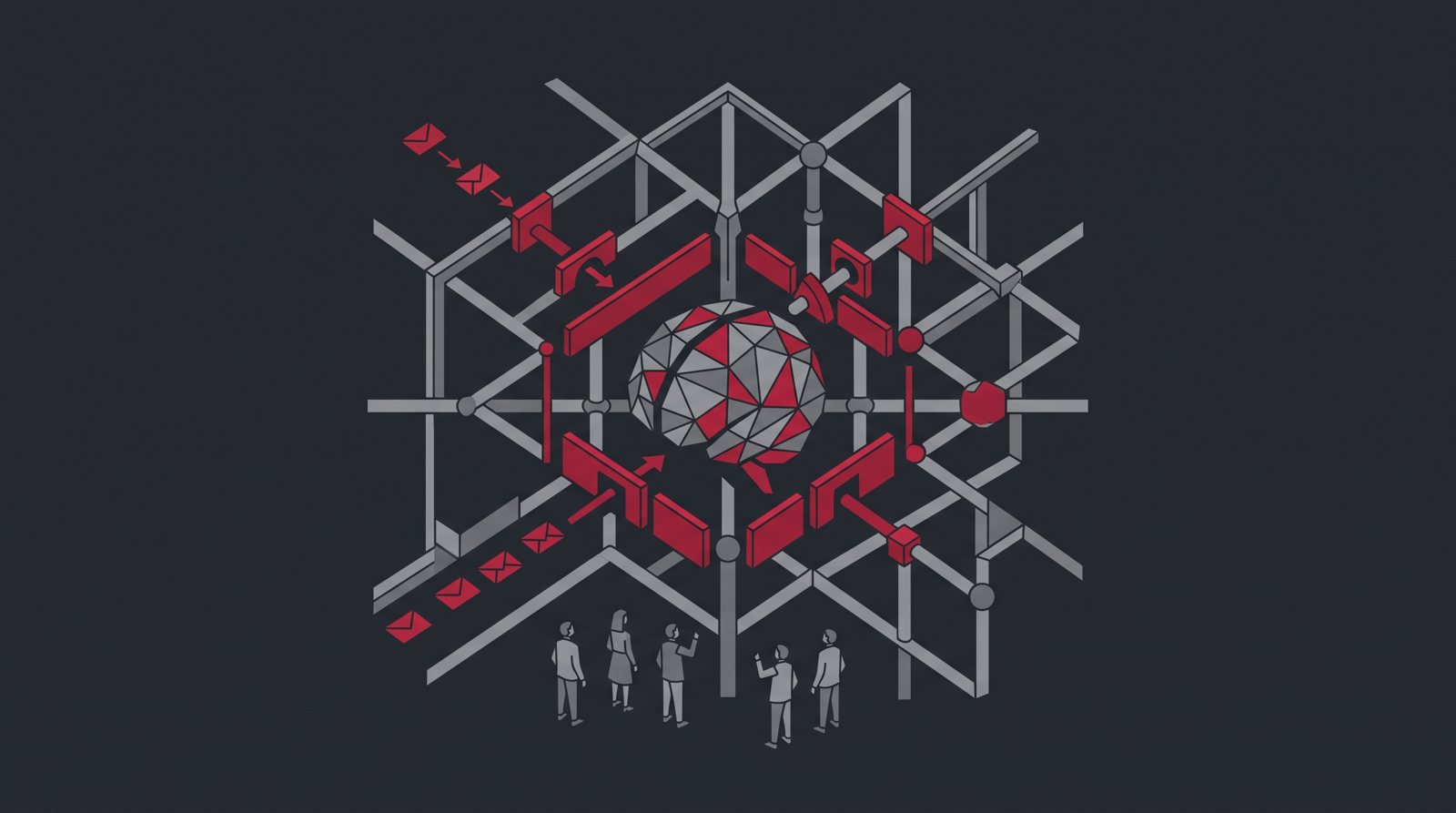
The Spanish enclave of Ceuta, wedged against Morocco's northern coast and fenced off by one of the European Union's most heavily fortified land borders, is once again at the center of a debate about what role social platforms play when a migration crisis unfolds in real time. According to NYT, an August 11 report examines how social media has shaped the dynamics between Spain and Morocco around Ceuta, and raises questions about the social responsibility platforms carry when their products become part of a humanitarian flashpoint.
Ceuta is not new to this story. The enclave has repeatedly made international headlines when large groups of migrants attempt to cross the border fence or swim around it, and each episode tends to coincide with surges of activity on messaging apps and short-form video platforms. What's different now is the framing: this is no longer treated as an isolated border-security story, but as a case study in how consumer technology products — recommendation feeds, group chats, livestreams — interact with a humanitarian emergency.
For an outlet like AiiN, the interesting part isn't the geopolitics of Ceuta itself. It's the fact that a story about a border crisis is, at its core, a story about product design choices made far from the border itself, by teams who rarely think of their work as border-relevant at all.
Why a border crisis becomes a platform story
Migration events like the one around Ceuta unfold through the same distribution mechanics as any other viral moment: content gets posted, algorithms decide who sees it, and engagement signals decide what gets amplified further. When that content concerns routes, timing, or the perceived porousness of a border, the stakes of getting distribution wrong are considerably higher than a bad recommendation on a shopping app.
The pattern the NYT piece describes — social platforms acting as an accelerant in a cross-border humanitarian situation — echoes a broader dynamic already documented around other crises: platforms are rarely built with a case where content could trigger a real-world mass movement of people in mind, and moderation systems trained on hate speech, spam, or copyright are often the wrong tool for that scenario.
What this means in practice for builders
Teams shipping consumer AI products — recommendation systems, generative video tools, chat assistants, translation layers — rarely think of themselves as being in the crisis amplification business. But the Ceuta case is a reminder that any product with a distribution mechanism and a global user base can end up there uninvited. A few practical takeaways:
- Geofenced or context-aware moderation is not optional at scale. A ranking system tuned for engagement in one market can have unintended real-world effects in a neighboring one, especially near contested or sensitive borders.
- Coordination content looks different from misinformation content. Trust-and-safety stacks built to catch false claims often miss organizing activity — logistics, timing, meeting points — because nothing in it is technically false.
- Crisis playbooks need to exist before the crisis, not during it. Platforms that scrambled to respond after Ceuta-style surges tend to do so reactively; the ones with pre-built escalation paths to regional trust-and-safety teams respond faster.
- AI-generated and AI-recommended content adds a new layer. As generative tools make it easier to produce convincing video and translated messaging at scale, the line between organic coordination and platform-amplified content gets blurrier.
AiiN's takeaway
The Ceuta story is a useful stress test for a question the AI industry keeps deferring: who is responsible when a product built for engagement ends up mediating a humanitarian emergency? In our estimation, the honest answer is that most consumer platforms and AI tools are not currently built to answer that question well, because it was never part of the original design brief. That's not a reason to panic-add features, but it is a reason for teams building anything with reach — recommendation engines, chat products, video generation — to treat the question of what happens if this becomes relevant to a border or refugee situation as a real design scenario, not an edge case to be handled after the fact.
The practical fix isn't complicated to state, even if it's hard to execute: build moderation and ranking systems that can be reconfigured quickly for a specific geography and situation, keep a standing relationship with regional fact-checkers and NGOs rather than improvising one mid-crisis, and treat content that could move real people toward a real border as its own category, separate from garden-variety misinformation. None of that requires new technology. It requires deciding, ahead of time, that social responsibility is part of the product spec.