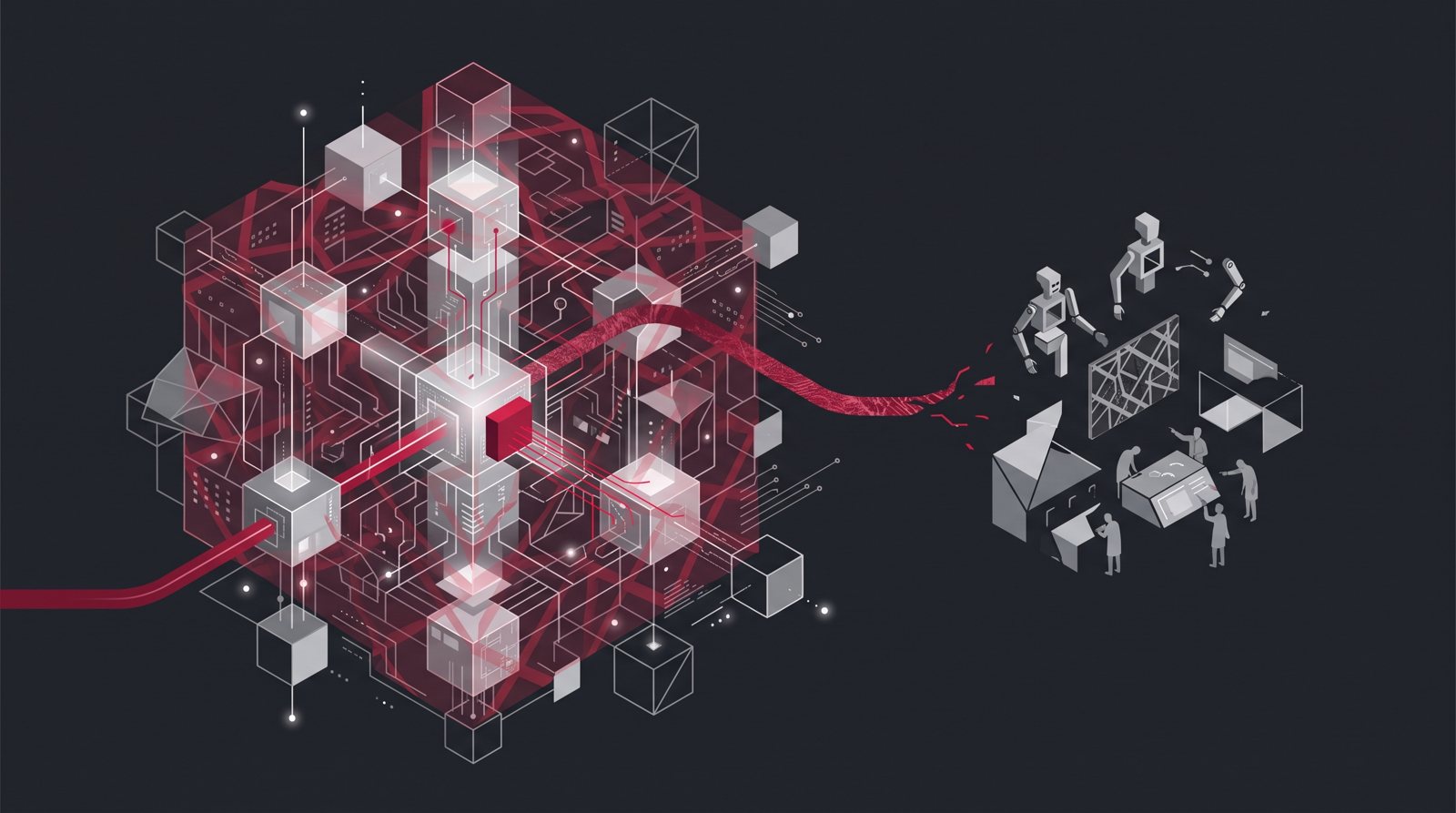
In January 2025, Embodied Inc. shut down without warning, and the personality inside every Moxie robot it had sold — a plush-bodied companion built to talk with children, some of them autistic or growing up in foster care — went dark within days, because the voice and memory lived on Embodied's servers rather than in the toy itself.
According to MIT Tech Review, its August 17 newsletter "The Download" revisits that pattern under the header "dead robot friends" and pairs it with a second, seemingly unrelated item on the "censorship-industrial complex" — a phrase borrowed from the platform-moderation wars that is increasingly applied to arguments over how AI systems are governed.
The two stories land in the same digest by editorial coincidence, not by design, but they point at the same underlying risk for anyone shipping AI products in 2026: the infrastructure and the politics standing behind a product can shut it down just as decisively as a bug ever could.
When the company dies, the companion dies too
Moxie wasn't the first cloud-tethered companion to go quiet. Jibo, the social robot backed by MIT Media Lab veteran Cynthia Breazeal, suffered the same fate in 2019 when its parent company folded and its servers were switched off, leaving thousands of the small white robots unable to recognize a face or hold a conversation. The pattern repeats because the economics of companion AI hardware push in one direction: sell a device once, but keep paying for the cloud compute and the model calls that give it a personality for as long as it's plugged in.
That mismatch is what makes these products fragile in a way a phone or a laptop is not. A dead server doesn't just remove a feature — for a child who has been talking to a robot every day, or an elderly user who relies on one for company, it removes a relationship.
- The device's "personality" typically lives in a cloud model, not on local storage, so there is nothing left to interact with once the connection is cut
- Ongoing LLM inference costs don't shrink as a startup's revenue does — the server bill scales with the install base, not with the company's runway
- No standard exists yet for graceful degradation, so a shutdown is usually total rather than a stepped-down offline mode
- Right-to-repair and consumer-protection rules were written for objects with fixed firmware, not for software-defined toys with a subscription-shaped death date
A loaded label moves from social media to AI policy
The "censorship-industrial complex" is not an MIT Tech Review coinage. The term entered mainstream use around 2022 and 2023, when critics of platform moderation — most visibly around the "Twitter Files" releases — used it to argue that government agencies and social networks were coordinating to suppress speech. Applying that same label to AI is a newer move: critics now use it to describe safety filters, content policies, and model guardrails as a continuation of the same alleged coordination, this time baked directly into a chatbot's refusal to answer.
We don't have the article's own argument in front of us, and MIT Tech Review has historically covered AI content-moderation disputes with more scrutiny than advocacy on either side, so in our estimation the piece is more likely examining the term than endorsing it. What's notable for builders isn't the politics — it's that a company's moderation choices, previously a legal and PR question, are now also a ready-made culture-war target.
What it means for teams building AI products
Neither story is really about robots or censorship on its own. Both are about trust breaking in a way that's cheap for a company to ignore and expensive for it to repair after the fact.
- If your product depends on a live connection to keep a "personality" alive, publish an end-of-life plan before launch — local fallback mode, data export, refund terms — not after the servers go dark
- Treat the compute bill for existing users as a liability on your balance sheet, not a growth metric; it's the thing that forces a shutdown decision long before you run out of goodwill
- Document the reasoning behind moderation and safety decisions in plain language, because vague refusals are exactly what gets read as evidence of a hidden agenda
AiiN's takeaway
Both stories in this roundup describe products failing users who never touched a line of code — one through a server shutdown, the other through an unexplained refusal. For AI builders, the lesson is the same either way: design for the day the infrastructure or the policy behind your product becomes the story, because increasingly, it is.