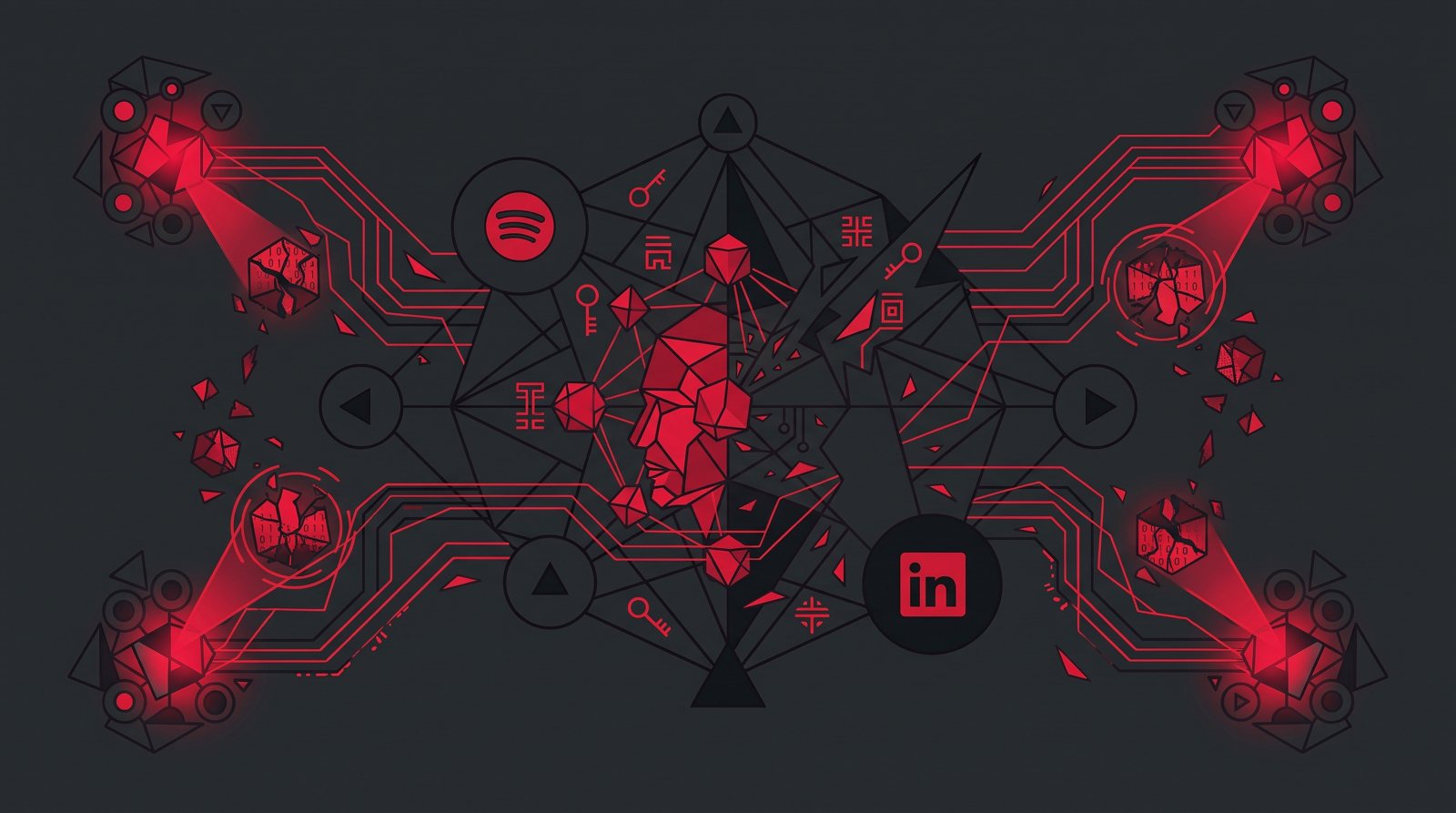
Spotify and LinkedIn are the latest platforms to say they've reached a breaking point with AI-generated junk clogging their feeds and catalogs, according to NYT, which reported on August 17, 2026 on a mounting industry backlash against what's now commonly called "AI slop." The term covers everything from auto-generated songs and fake artist profiles to formulaic LinkedIn posts and SEO-bait articles, all produced at a volume no human editorial team could ever match.
The pushback matters because these two platforms sit on opposite ends of the content spectrum — one is built on curated audio discovery, the other on professional credibility — yet both are now dealing with the same structural problem: generative tools have made it trivially cheap to flood a feed, and the old moderation playbook wasn't built for that kind of throughput.
For AI builders, this is less a story about spam and more a signal about where the next wave of platform-side constraints is heading — rate limits, mandatory disclosure, and detection tooling that will shape how any AI-generated content gets distributed at scale.
Why "slop" became a platform-level problem
The word "slop" caught on because it captures something specific: content that isn't necessarily false or malicious, just low-effort and mass-produced, optimized for algorithmic reach rather than for the reader or listener on the other end. On music platforms, that means AI-generated tracks uploaded under invented artist names, sometimes mimicking the style of real musicians, competing for the same playlist slots and royalty pools as human artists. On a professional network like LinkedIn, it means formulaic "thought leadership" posts, AI-written comments, and engagement bait that degrades the exact signal the platform was originally built to provide.
Both platforms monetize attention and trust — Spotify through streaming royalties and playlist curation, LinkedIn through ad revenue and premium subscriptions tied to professional credibility. AI slop threatens both mechanisms at once: it dilutes royalty pools with content nobody meaningfully listens to, and it erodes the sense that what you're reading in a feed came from a real person with real expertise.
What "enough" actually looks like
Platforms rarely solve a slop problem by banning AI content outright — that's neither technically enforceable nor commercially desirable, since a huge share of creators now use AI tools somewhere in their workflow. Instead, the realistic toolkit looks like:
- Detection and filtering systems that flag mass-uploaded or low-signal content before it ever reaches a recommendation algorithm
- Disclosure requirements, where creators must label AI-assisted or AI-generated posts and tracks
- Stricter upload limits and identity verification designed to slow down bulk, automated publishing
- Demotion rather than outright removal — pushing suspected slop out of algorithmic feeds instead of taking it down
None of these are silver bullets. Detection classifiers lag behind generation models, disclosure labels are trivial to skip, and demotion only works if a platform's recommendation system is transparent enough to audit in the first place — which most aren't.
What this means for people building with AI
The practical takeaway for developers and teams shipping AI-generated content isn't "stop using AI" — it's that distribution channels are starting to price in provenance. A few implications worth planning around:
- Tools that mass-publish AI content to social or music platforms should expect rate limits and account-level scrutiny to tighten, not loosen
- Disclosure metadata — labeling a post, track, or image as AI-assisted — will likely move from optional to required on major platforms, in our estimation, echoing content-credential efforts several of these companies already have underway
- Products built around raw AI-generated volume, like SEO content farms, auto-posted social feeds, or bulk AI music uploads, are the most exposed to sudden policy changes, since they depend entirely on a distribution channel that doesn't want them
- Products that use AI to assist one identifiable creator rather than replace a creator entirely are less exposed, because the thing platforms are trying to protect is human-attributable content, not generative technology itself
AiiN's takeaway
The Spotify and LinkedIn crackdowns described by NYT are best read as an early, uneven attempt to draw a line that AI progress has made blurry: not "AI-generated" versus "human-made," but "worth someone's attention" versus "optimized purely for algorithmic reach." That line will keep shifting as generation quality improves and detection struggles to keep pace. Builders who treat platform distribution as a resource to be respected, rather than a channel to be maximized, will be the ones still standing when the next round of filters ships.