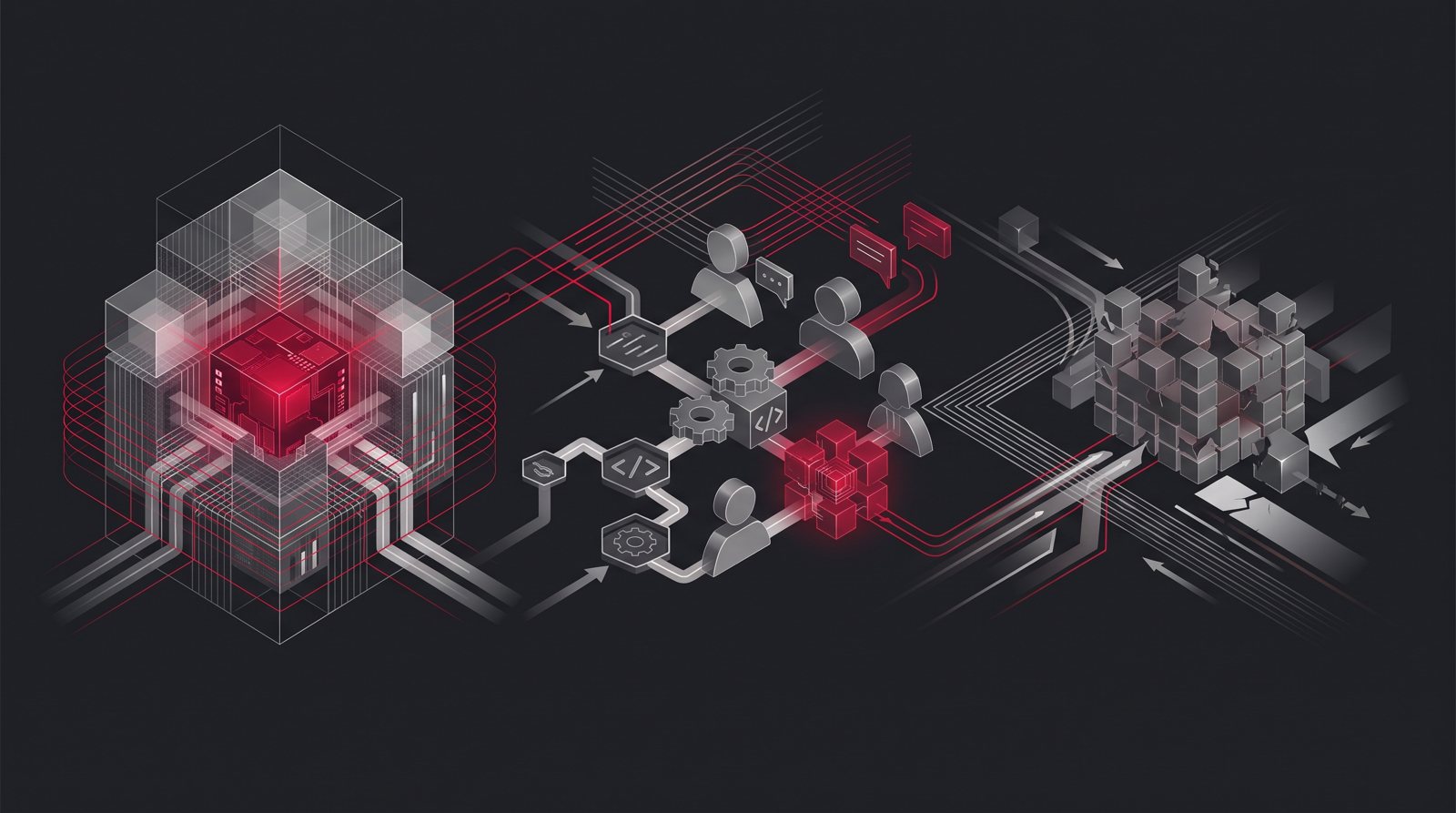
Slack rolled out a feature called Slack Code that lets AI agents work directly inside group channels, posting and responding in the same thread as the human team members around them, instead of being locked into a private, one-on-one chat window.
That distinction matters more than it sounds. Most enterprise AI assistants today are still bolted onto the side of a product — a chat panel you open, ask a question, and close. Slack Code instead drops the agent into the shared space where the actual coordination already happens: the channel where a team plans sprints, debugs incidents, and argues about deploy timing.
According to The Register AI, the launch is part of a wider pattern of moving AI agents out of standalone interfaces and into the everyday tools teams already use to get work done — the same direction Slack itself has been pushing since it first added AI features to its platform. That framing matters because it treats chat itself, not a dedicated agent surface, as the delivery mechanism for AI at work.
From assistant to participant
The practical difference between a sidebar bot and a channel-native agent comes down to context. A sidebar assistant only knows what you tell it in that session. An agent sitting inside the channel sees the same thread history, the same @-mentions, the same back-and-forth that human teammates already use to stay aligned — without anyone having to copy-paste context into a separate window. It also means the agent's mistakes are visible to the whole team in real time, not quietly buried in a private session log.
- No context handoff: the agent reads what's already been said, instead of requiring a fresh prompt every time.
- Shared visibility: everyone in the channel sees what the agent did and said, not just the person who invoked it.
- Native turn-taking: the agent responds in-thread, the way a human collaborator would, rather than through a modal or a separate app.
Part of a bigger UX shift
Slack Code isn't happening in isolation. It reflects a direction the industry has been circling for a while: agentic AI moving out of dedicated chat windows and into the tools people already spend their day in — issue trackers, code editors, project boards, and now team chat. The logic is straightforward: if an agent has to be summoned to a separate app to be useful, it competes with a human's attention instead of extending it.
What builders should take from this
For teams building agentic products, embedding an agent in a shared, multi-human space raises questions that a private chatbot never had to answer.
- Who can see the agent's actions, and does it need scoped permissions per channel rather than per user?
- How does the agent avoid flooding a channel with responses when it isn't the intended recipient of a message?
- What audit trail exists when an agent — not a person — posts something wrong in a shared, permanent record?
- How is the agent visually or structurally distinguished from a human teammate in the same thread?
None of these are solved by better prompting. They're product and permissioning decisions, and any team shipping an agent into a shared channel — Slack or otherwise — will have to make them explicitly rather than inherit them from a single-user chatbot design.
AiiN's takeaway
The interesting part of this launch isn't the feature itself — it's what it signals about where agent UX is heading. The default shape of an AI agent is shifting from "a chatbot you open" to "a participant already in the room." In our estimation, that shift will force more products to treat agent identity, permissions, and audit logging as first-class design problems, not afterthoughts bolted on once the bot ships. For AI builders, the takeaway isn't "add your agent to a group chat" — it's that the interfaces users already trust for human coordination are becoming the interfaces agents are expected to work inside too.