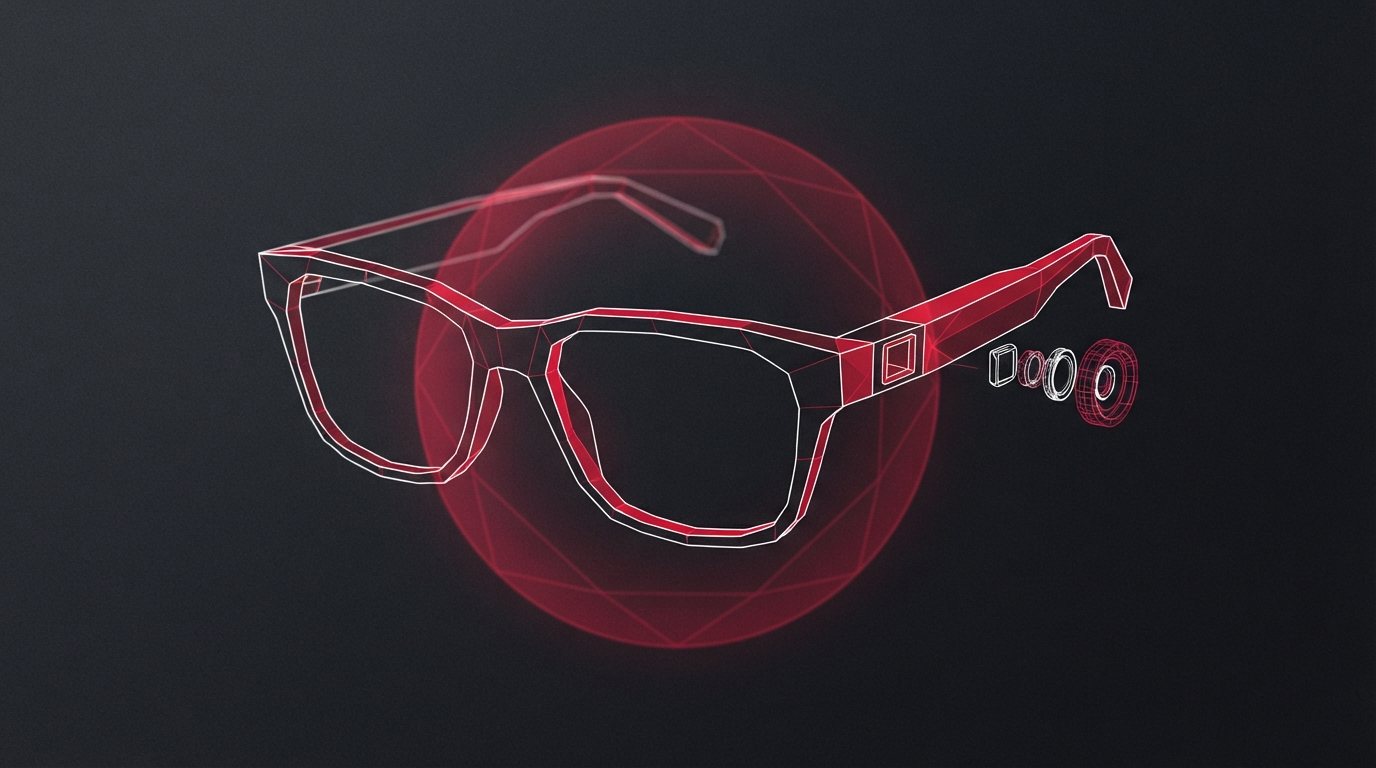
RayNeo has stripped the camera out of its newest AI glasses, betting that on-lens text — not computer vision — is what makes smart glasses useful day to day. According to The Decoder, the device runs live translation and subtitle overlays instead of the camera-driven features — capture, scene recognition, visual search — that most competing smart glasses are built around.
That's a narrow decision, and a deliberate one. The past two years of camera-equipped smart glasses have been defined less by their features than by the arguments they start: bystanders who don't know they're being recorded, venues that ban the devices at the door, reviewers who spend more time discussing consent than usability. RayNeo isn't proposing a brighter recording light or a mandatory shutter click to fix that. It's removing the part that causes the argument.
The trade-off is blunt: less capability, lower risk, lower price. For a category still trying to convince a skeptical public it's worth wearing at all, that trade might be the more sellable one.
The camera has become the category's liability
Every major smart-glasses launch since Meta's Ray-Ban line went mainstream has run into the same friction: a camera pointed outward, worn on a face, capturing whoever happens to be nearby. It doesn't matter how the recording indicator is implemented — a small LED next to a lens reads as either invisible or ignorable to the person standing in front of it. That single design choice has produced bans in gyms, courtrooms, casinos and locker rooms, and it's the first objection every non-technical reviewer raises before getting to battery life or display quality.
Cameras also carry hardware and software cost that never shows up in the marketing copy: image sensors, onboard or cloud vision processing, storage, and the compliance overhead of handling footage of people who never opted in. Cutting the camera removes all of that at once, not just the privacy objection.
What's left when there's no computer vision
Without a camera, RayNeo's glasses reduce to a narrower job: putting text in front of your eyes at the right moment. Per The Decoder, that means:
- Live translation overlays for spoken conversation
- Real-time subtitles, the kind useful in meetings, lectures or noisy environments
- No photo or video capture, and no scene-understanding features tied to a camera feed
That's a much smaller feature set than a camera-equipped competitor, and RayNeo is treating that as the point rather than a limitation to apologize for. A pair of glasses that only overlays text doesn't need the compute budget, sensor stack or data pipeline that vision features demand — which is exactly where the promised cost savings come from.
Why this matters if you're building AI hardware
The lesson here isn't really about glasses. It's about what happens when you treat "fewer sensors" as a feature decision instead of a fallback for a cheaper SKU. Most AI hardware teams default to maximal sensing — camera, mic array, always-on capture — because it's the safest way to keep options open for future features. RayNeo's glasses argue the opposite: pick the one job the device needs to do well, then strip everything that doesn't serve it.
For teams building wearables, that translates into a real question worth asking before the sensor list gets locked in: does this feature need a camera, or does it need the output a camera happens to produce? Live subtitles and translation don't need computer vision at all — they need a microphone and a display. Treating the camera as a default rather than a requirement is likely, in our estimation, to become a more common design split as the category matures and regulatory pressure on always-on cameras increases.
AiiN's take
This isn't a flagship move, and RayNeo doesn't seem to be pretending otherwise. It's a niche product for a specific set of use cases — translation, captions — sold at a lower price with a materially smaller privacy footprint. That's a legitimate segment of the smart-glasses market, not a compromise version of a "real" pair of AI glasses.
What's worth watching is whether other AI hardware makers follow the same logic, or whether the camera stays the default simply because it keeps future feature roadmaps open. RayNeo has picked a lane; the rest of the category still hasn't.