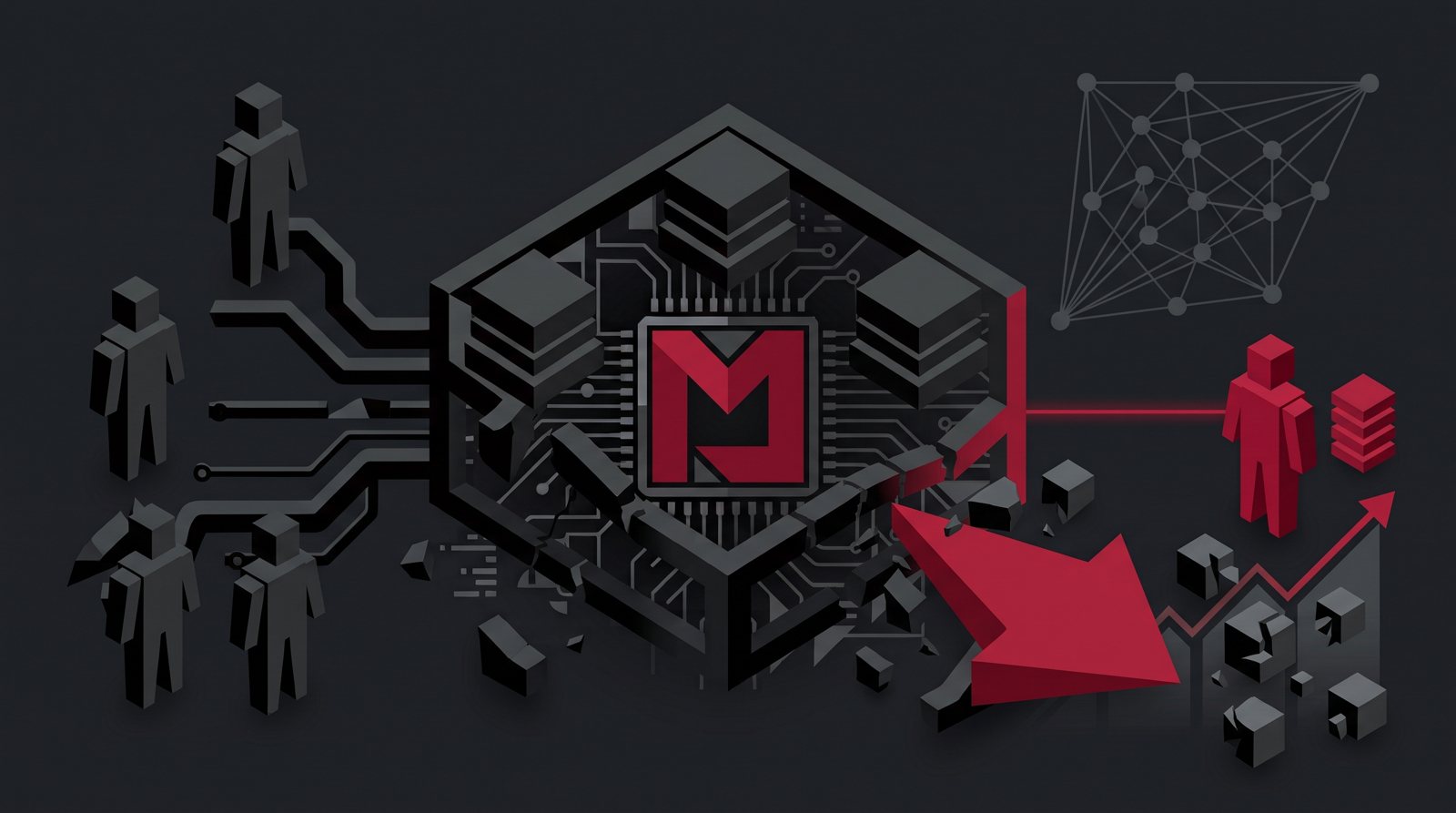
Mistral AI plans to build out 1 gigawatt of AI compute capacity by 2030, according to a report from AI Business — a scale that would put the French startup in the same infrastructure conversation as OpenAI, xAI, and Meta, if at a fraction of their current build-out pace.
A gigawatt is the unit US hyperscalers use to describe data-center-scale AI buildouts: it's roughly what OpenAI's Stargate campuses and xAI's Colossus cluster are measured in, not gigabytes of storage or a single training run's memory footprint. For Mistral, publicly committing to a gigawatt-class target by the end of the decade is as much a statement of intent as an engineering plan — it says the company wants to own enough of its own compute to stop renting all of it from cloud partners.
According to AI Business, the goal is tied directly to Mistral's model roadmap: more in-house compute means faster iteration on new models and more room to push efficiency gains rather than just raw parameter count.
Why compute ownership matters now
Every frontier lab currently rents most of its training and inference capacity from Microsoft Azure, AWS, Google Cloud, Oracle, or a handful of neoclouds like CoreWeave. That arrangement works until demand spikes, pricing shifts, or a cloud partner prioritizes its own models — all of which have already happened across the industry this year. Building dedicated capacity is the hedge:
- Lower marginal cost per training run once the capacity is amortized
- Control over hardware allocation during compute-constrained periods
- Less exposure to a single cloud vendor's roadmap or pricing changes
- A more defensible position on the infrastructure-control question driving European AI sovereignty debates
Mistral is not alone in making this calculation — but it is one of the few non-US labs signaling it wants to play the infrastructure game at all, rather than staying purely a model shop that licenses compute from whoever offers the best rate.
What a 1GW target actually buys
One gigawatt is a meaningful but not enormous commitment in the current AI infrastructure landscape — comparable to a single large data center campus rather than the multi-gigawatt, multi-site programs that OpenAI and Microsoft have described for the back half of the decade. For a company Mistral's size, it is still a significant capital and power-procurement undertaking: securing that much grid capacity, the land, and the cooling infrastructure typically takes years of permitting and negotiation before a single GPU rack goes in.
The stated purpose, per the report, is straightforward: use the capacity to train new models and improve the efficiency of existing ones. That framing matters because it puts Mistral's bet on the same side as most of the industry right now — efficiency gains and iteration speed, not just scale for its own sake.
What this means for AI builders
For teams building on top of Mistral's models — via its API, Le Chat, or open-weight releases like the Mistral and Mixtral families — a larger owned compute base could translate into a few concrete things over the next several years:
- More frequent model releases if training cycles are less gated by external compute availability
- Potentially better price-performance on Mistral's hosted API, since owned infrastructure removes a cloud markup from the cost stack
- A more credible European alternative for teams that need to keep inference and fine-tuning data within EU jurisdiction, separate from US hyperscaler infrastructure
- Continued open-weight releases, which Mistral has used as a differentiator against closed labs — more in-house compute doesn't necessarily change that strategy, but it removes one dependency that could constrain it
None of this is guaranteed by the target alone. A 2030 horizon is far enough out that the plan could slip, get rescoped, or depend on external financing and partnerships that haven't been disclosed.
AiiN's take
The interesting signal here isn't the number — it's that Mistral is thinking about infrastructure ownership at all. Most model labs outside the US mega-cap orbit have treated compute as a line item to negotiate, not an asset to build. A 1GW target, even years out, suggests Mistral wants to avoid being squeezed the way smaller labs have been when a cloud partner's own AI ambitions started competing for the same GPUs. In our estimation, the more consequential detail to watch for isn't the 2030 date — it's whether Mistral names specific power and data-center partners in the next year, which would signal how seriously the target is being executed against rather than just announced.