Andrej Karpathy, the former Tesla AI director and OpenAI founding member, has spent much of the past year experimenting in public with how he manages his own notes alongside large language models, and one of those habits has now migrated into a working newsroom. According to Platformer, a reporter at the outlet started keeping a single, continuously updated wiki document as their primary interface to an LLM instead of opening a fresh chat window for every task, and says the switch changed how they report and write.
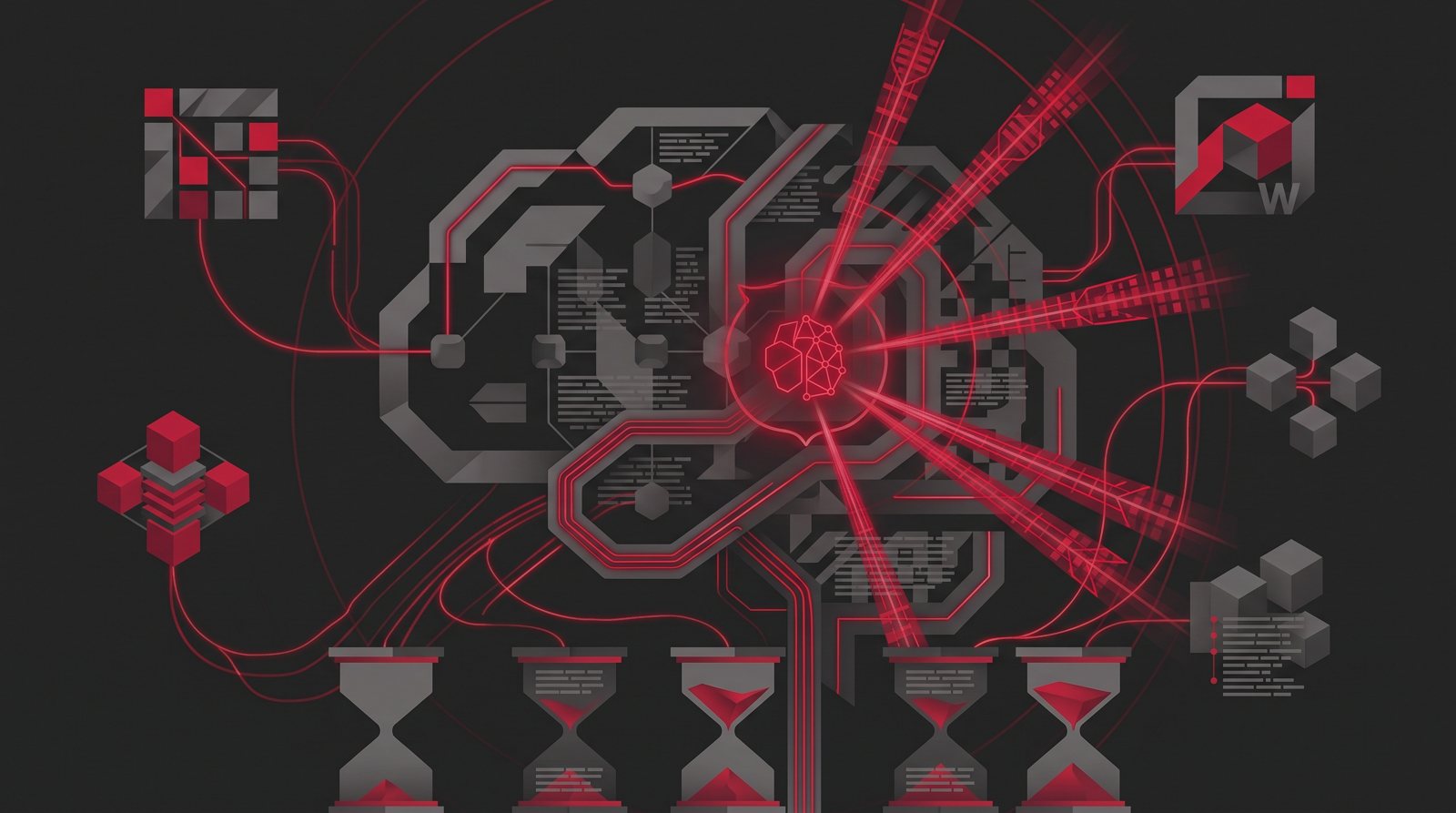
The mechanics are almost too simple to sound significant. Rather than pasting background, sources, and prior context into a new prompt every time, the idea is to maintain one file per beat, project, or story. The model reads it at the start of a session and edits it at the end, so the document accumulates structure over weeks instead of evaporating the moment a chat tab closes.
That distinction — a wiki that compounds versus a chat log that resets — turns out to matter more than it sounds for anyone doing repeated, cumulative work with an LLM, journalism very much included.
Why the default chat interface keeps losing context
Most professional LLM use still runs through a thread that is disposable by design. Even with million-token context windows and features like ChatGPT's memory or Claude's Projects, the basic unit of interaction remains the conversation, and conversations get abandoned, forgotten, or buried under dozens of other tabs. Every new thread means re-explaining who the sources are, what's already confirmed, and what angle a piece is taking — work a reporter would never redo by hand with a paper notebook.
Karpathy's framing flips that: the unit of work isn't the conversation, it's the document, and the LLM's job is to act as an editor on it, not a stranger meeting the story for the first time.
What changes when the wiki becomes the interface
In practice, a hand-maintained wiki tends to change a few concrete things about the workflow:
- Picking up a story after a week away takes one read of the wiki, not a re-briefing of the model from scratch
- Contradictions and stale facts show up as edits to a single page instead of hiding in a dozen separate threads
- The wiki itself becomes an audit trail of how the reporter's understanding of a story evolved, not just what the current chat remembers
- Basic version history turns the document into a source of truth the writer controls, not one the model quietly manages
That's not a new AI capability — it's discipline borrowed from how reporters already handle sourcing, applied to a tool that otherwise forgets everything between sessions.
The lesson for anyone building with LLMs
For AI builders, the appeal of a manually maintained wiki is really a quiet critique of automated memory features. A product that decides on its own what to remember and what to forget is convenient right up until it's wrong, and there's no way to audit a memory you can't see. A markdown file you edit yourself has none of that magic, but it's legible, portable across models, and cheap to build.
The whole pattern reduces to a few habits, none of which require a special product:
- One file per project or beat, never per conversation
- A standing instruction that tells the model to read the wiki first and propose edits at the end, not just answer and move on
- Plain text or markdown, so it's diffable, greppable, and portable between Claude, GPT, Gemini, or whatever comes next
- A human reviewing every edit before it's trusted as fact, since an LLM can misremember its own notes as easily as a person can
AiiN's takeaway
The habit Platformer describes isn't a new model capability, it's a workaround for one LLMs still haven't shipped well: durable, trustworthy memory. Every major lab is building toward automatic memory, but until it's reliable enough to hand over without double-checking, in our estimation, disciplined builders and writers will keep running the version they can read and correct themselves. That's less a limitation to wait out than a product gap someone will eventually close — and whoever ships a wiki that updates itself as cleanly as Karpathy edits his by hand will be selling exactly what this workaround proves people already want.