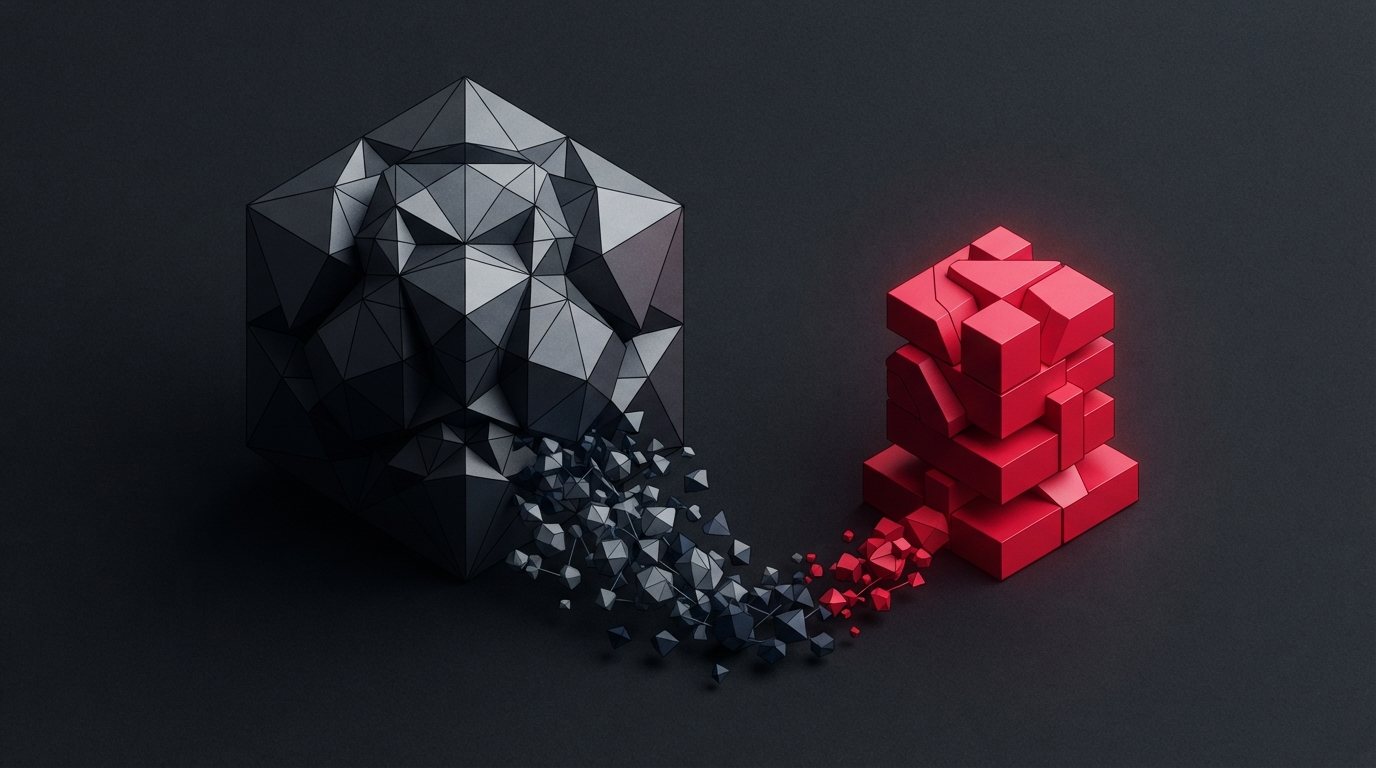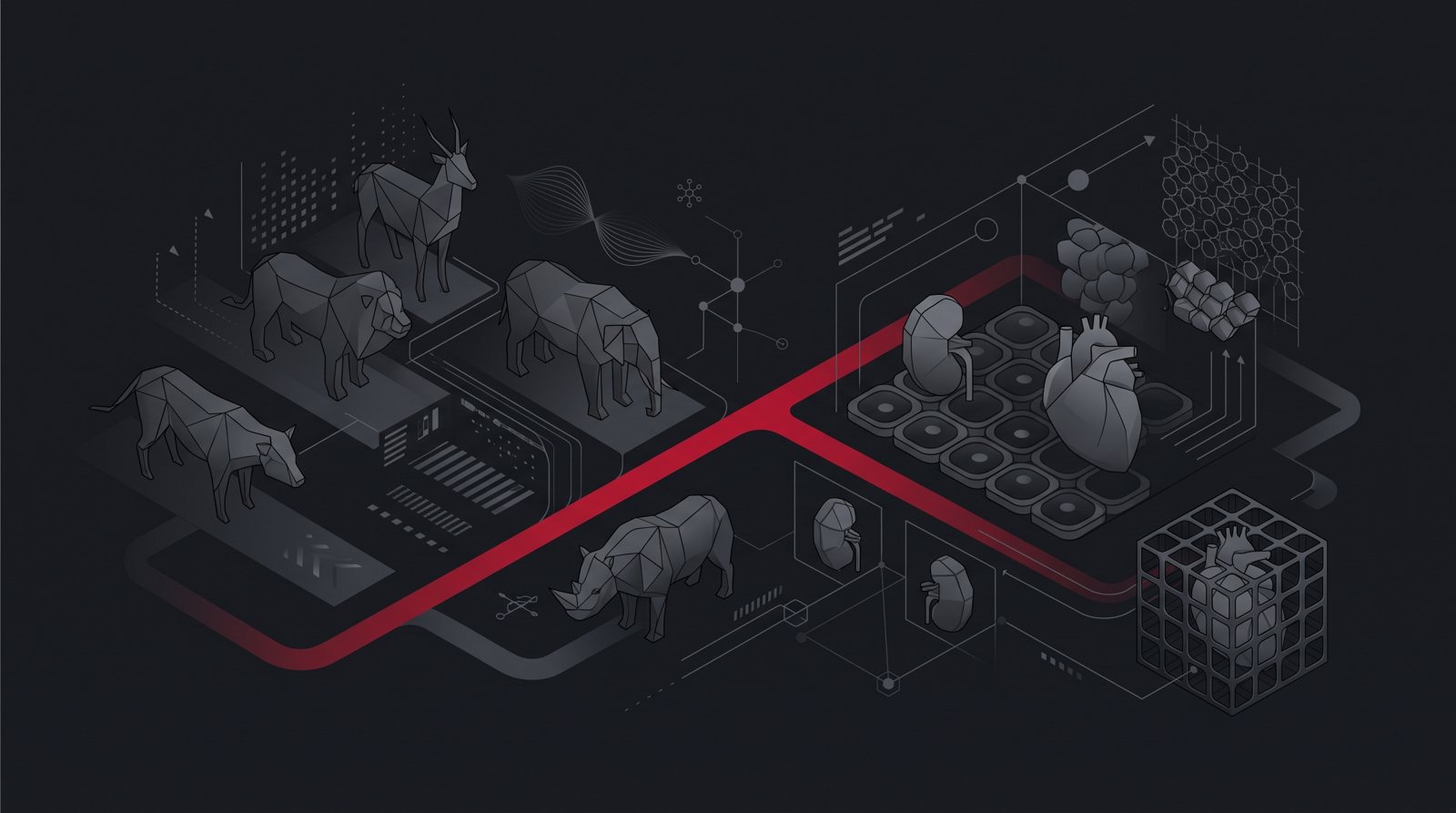
On August 14, 2026, MIT Technology Review published an analysis of where cloning research is actually headed three decades after Dolly the sheep — and it splits into two sharply different paths: using the technique to pull endangered species back from the brink, and, at the speculative far edge, growing headless human bodies purely as organ donors, a scenario the piece labels "organ sacks."
That framing lands because cloning has quietly stopped being a lab curiosity. Somatic cell nuclear transfer (SCNT) — the same method that produced Dolly in 1996 — has already been used to clone a black-footed ferret, a Przewalski's horse, and banteng cattle from cell lines held in frozen conservation biobanks. Companies such as Colossal Biosciences have combined cloning with gene editing for high-profile de-extinction work. The organ-harvesting scenario, by contrast, is not something anyone is doing — but the underlying biology required to attempt it already exists in labs today.
According to MIT Tech Review, the distance between these two applications isn't really about the science — the cloning workflow is the same regardless of species. It's about how far institutions, regulators, and investors are willing to push a mature technique once it's pointed at humans.
Conservation cloning has moved from novelty to toolkit
The species-saving side of the story is the least controversial and the most advanced. Conservation biologists have spent two decades building "frozen zoos" — biobanks of skin cells and genetic material from endangered animals — specifically so cloning could be used later, once the technique matured. That bet has started paying off:
- Elizabeth Ann, a cloned black-footed ferret, was born in 2020 from cells frozen since 1988, restoring genetic diversity a nearly extinct population had lost.
- Kurt, a cloned Przewalski's horse, added a founder line back into a species that had dwindled to a handful of individuals.
- Cloned banteng calves have been used to reintroduce genetic variation into a critically endangered wild cattle species.
These aren't one-off stunts; they're a deliberate strategy to fight inbreeding depression in small populations — a problem that ordinary captive breeding programs can't solve because the genetic diversity simply isn't there anymore.
The organ-sack scenario is speculative — but not science fiction
The darker application discussed in the piece is a human clone engineered, via developmental gene edits, to never develop a functioning brain or consciousness — effectively a body grown solely to be harvested for organs that match a specific patient's immune profile. No such clone exists, and the piece treats it as a bioethics thought experiment rather than a live project. But the reason it keeps surfacing in serious discussion is that every individual piece of the underlying biology — cloning, targeted gene editing, and manipulating early brain development — has already been demonstrated separately in animals.
That's the uncomfortable part: the barrier isn't technical feasibility, it's regulatory and ethical will. In our estimation, that combination is likely to keep this scenario in the "discussed but not attempted" category for years, but the fact that it's discussed at all signals how far cloning capability has already run ahead of the policy frameworks meant to govern it.
What this means beyond the lab
For anyone building or investing in biotech tools, the practical signal isn't the ethics debate — it's the infrastructure underneath both scenarios. Modern cloning and de-extinction pipelines increasingly lean on computational biology: machine-learning models reconstruct degraded ancient genomes, predict which gene edits will produce a viable embryo, and screen for off-target CRISPR effects before anything touches a living cell. That software layer is where the near-term commercial opportunity actually sits, well ahead of any clinical application involving humans.
It also means the policy conversation is arriving late. Frozen zoos and SCNT protocols were built for animals, under animal-research rules. There's no equivalent regulatory scaffolding sitting ready for the moment someone proposes doing anything comparable with human cells — which is exactly why a mainstream outlet is raising the organ-sack scenario now, before a lab forces the question.
AiiN's takeaway
The species-conservation case is the real story today: cloning is a working, funded, increasingly routine tool for reversing genetic loss in endangered populations. The organ-sack scenario is the warning label — a reminder that once a biotechnology matures for one purpose, extending it to a more troubling one is often a matter of willingness rather than invention. Builders in this space should treat the computational and gene-editing tooling as the fast-moving layer worth watching, and treat the ethics debate as a signal that regulation will eventually need to catch up to capability, not the other way around.