On August 23, 2026, SiliconANGLE published an analysis arguing that multi-agent AI systems break down less often because the underlying models are weak, and more often because nobody designed a reporting structure for the agents built on top of them. The core claim: once a pipeline connects more than a handful of agents, it stops behaving like a script and starts behaving like an organization — and organizations without clear roles collapse under coordination overhead, not compute limits.
That reframing matters because most teams still treat multi-agent orchestration as a wiring problem — connect agent A to agent B, pass a payload, retry on failure. According to SiliconANGLE AI, that mental model runs out of road once a pipeline scales past a handful of agents. The failure mode stops being "the model produced a wrong answer" and becomes "no agent was responsible for catching the wrong answer before it propagated three steps downstream."
For anyone currently shipping agentic systems in production — coding assistants that spawn sub-agents, support pipelines that triage and escalate, research tools that fan a query out into a dozen parallel calls — this is less a novel insight than a useful vocabulary. Software engineering already has a decades-old body of knowledge about structuring teams of workers with limited context and imperfect communication. It's called management, and it turns out a lot of it transfers directly.
Why flat agent swarms stop scaling
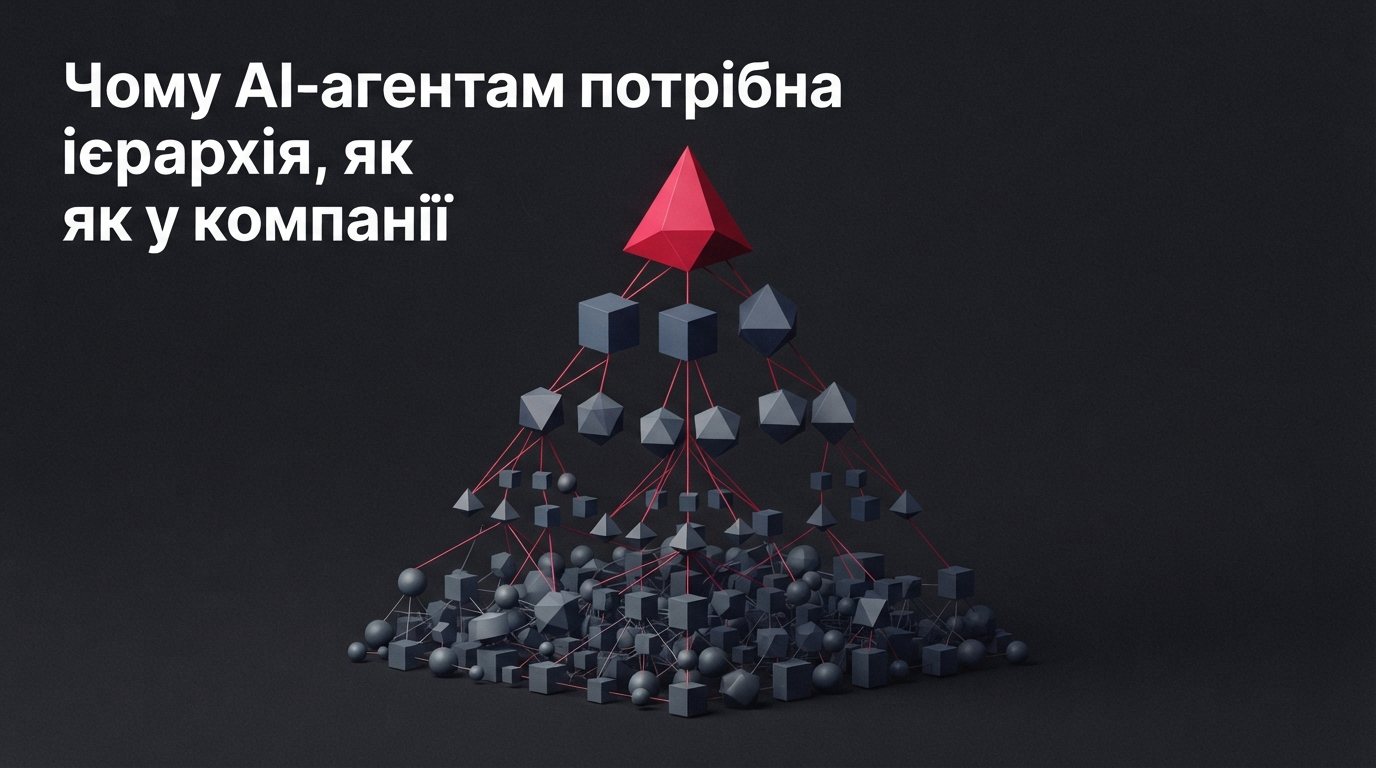
A flat swarm of agents — all reporting into one orchestrator, or all talking to each other as peers — fails for the same structural reasons a flat company does.
- One orchestrator juggling unlimited sub-agents hits a span-of-control ceiling much like a human manager does: past roughly five to nine active sub-agents, context tracking and error attribution start to degrade.
- Peer-to-peer agent chatter with no designated decision-maker produces the agentic equivalent of a meeting with no agenda — agents defer to each other, loop on the same sub-task, or quietly disagree without anyone noticing.
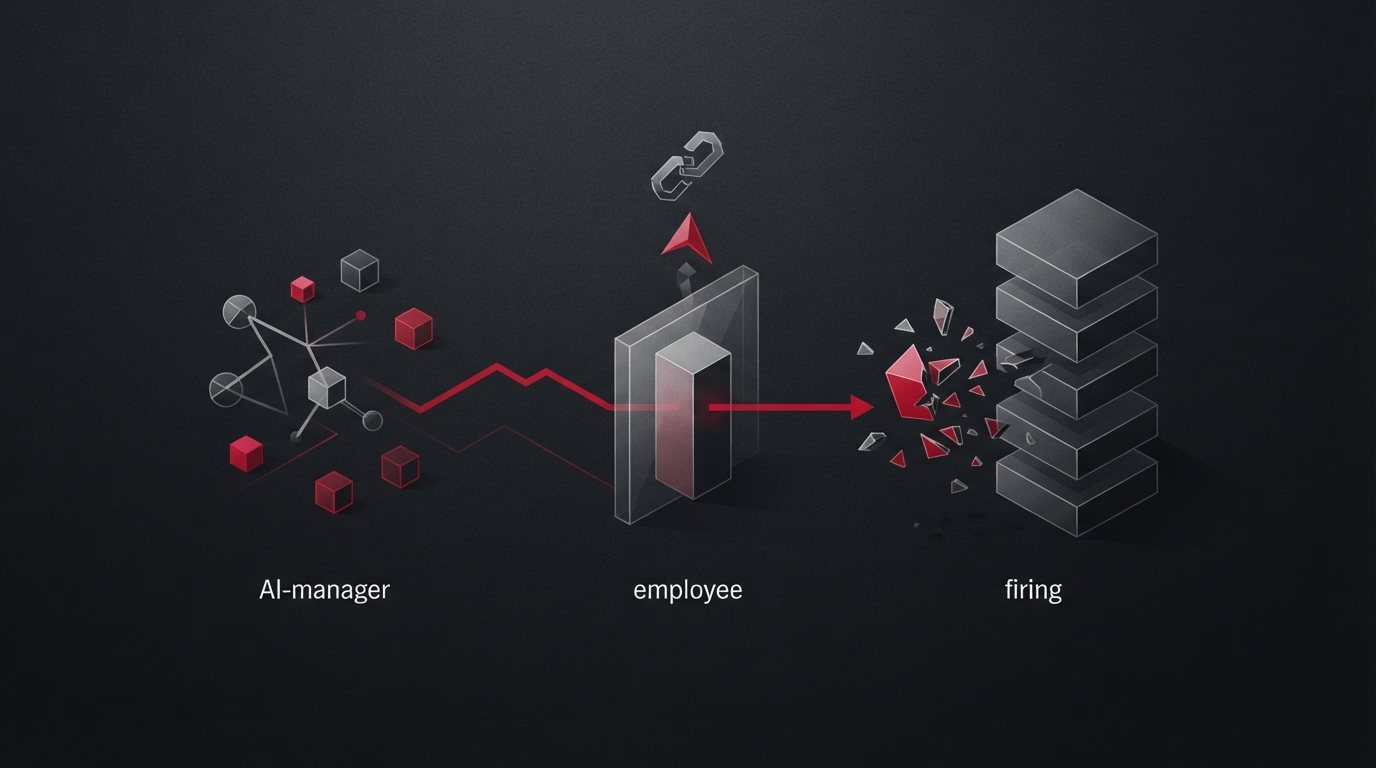
- Errors introduced early in a chain compound downstream because ownership of the outcome was never assigned to begin with, so nothing catches them.
What the hierarchy actually looks like
Applied to agent design, an org chart isn't a diagram for a slide deck — it's a set of concrete decisions made before the first API call:
- Who is the manager? One agent, or a thin layer of them, owns task decomposition and holds authority to override a subordinate agent's output.
- Who are the specialists? Worker agents get narrow, well-defined mandates instead of open-ended instructions, the same way a job description constrains scope for a human hire.
- Who reviews the work? A distinct QA or verifier role checks output before it moves to the next stage, instead of trusting each agent to self-certify.
- What happens when something fails? A worker agent that's uncertain or errors out has a defined next step — retry, escalate to a manager agent, or surface to a human — instead of failing silently or looping forever.
Where this framework earns its keep
The practical payoff isn't philosophical. Teams debugging a multi-agent pipeline that "sometimes gives wrong answers" usually find the actual bug is organizational — two agents both assumed the other was validating a number, or a worker agent had authority it was never supposed to have. Mapping roles and reporting lines before writing orchestration code turns those failures from mysterious into traceable: you can point at the exact box on the chart where accountability broke down, the same way you'd point at a team when a project misses a deadline.
AiiN's takeaway
The company-org-chart analogy won't map perfectly onto every agent pipeline, and a small two- or three-agent system can probably skip the ceremony — hierarchy earns its cost once a pipeline gets past the size you'd otherwise staff with a small human team. But as multi-agent architectures move from demos into production systems handling real customer interactions, this is the right instinct: borrow decades of management theory instead of reinventing it badly through trial and error. In our estimation, teams that write down agent roles, decision rights, and escalation paths before scaling out will spend a lot less time debugging pipelines that "sometimes just do the wrong thing" for reasons nobody can trace.